
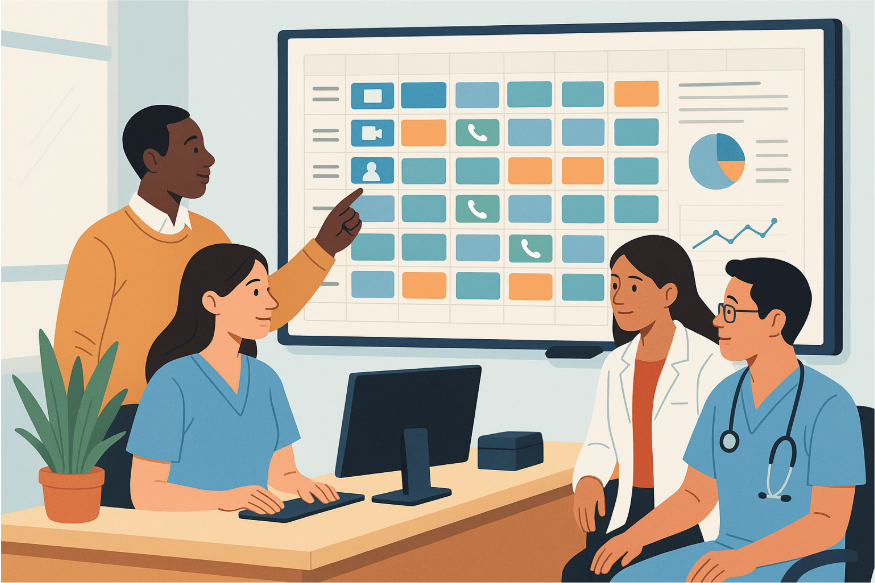
Your clinic day can feel like a game of Tetris at 8:00 a.m.—blocks dropping faster than your team can rotate them. In-person visits, video, phone, walk-ins, crisis slots, and no-shows collide in real time, leaving little room for error when funding is tightening and staffing is thin. Telehealth isn’t going away (especially in behavioral health), but hybrid care only helps when it’s designed with intention—not sprinkled in out of necessity.
This post offers a practical operations lens: start with a few clarity-building data questions, put simple guardrails in front of the front desk, and make three schedule-and-staffing shifts that stabilize access and protect revenue. The goal isn’t a perfect dashboard or a new platform—it’s a clinic day that works for patients, supports staff morale, and strengthens cash flow in the real world you’re operating in now.
Read More
Adjustments are the “background noise” of the revenue cycle, like the hum of an HVAC unit you stop noticing until it breaks. When cash tightens or staffing thins, that noise suddenly becomes the loudest thing in the building: Why are write-offs up? Why did net revenue dip? Why are refunds spiking? The uncomfortable truth is that many organizations don’t have a clean answer because too many adjustments get filed under a familiar—but misleading—label: contractual.
Read More

Medicaid redeterminations are driving costly churn—mostly procedural—not true ineligibility. This playbook shows FQHCs/CHCs how to find leaks, boost ex parte renewals, stand up a “Medicaid Help Desk,” and run a 30-day sprint that stabilizes coverage, lifts VBC performance, and protects cash.
Read More
Imagine the impact you can make with a healthy revenue cycle. Really, take a moment and imagine what capturing your current leakage could mean…
…did you imagine hiring an additional technician? Upgrading your computer systems? Providing access to another 100 underinsured patients?
Now that I have your attention, let’s talk about what you do next.

Naming a company is a personal journey. Today I am sharing my story along with a glimps into how I think!
Read More